
When hail hits a dealership lot, every unit on it stops being sellable at the same moment. The clock that matters is floor plan, not repair time.
The problem is throughput, not difficulty
Individual hail dents are routine work. Two hundred units of it in one week is not. What determines how fast a lot recovers:
- How many technicians can work simultaneously on site
- Whether units are triaged by damage severity and retail priority
- Whether the damage is documented per unit in a form your accounting and
insurance can both use
- Whether anything needs paint, which removes those units from the fast path
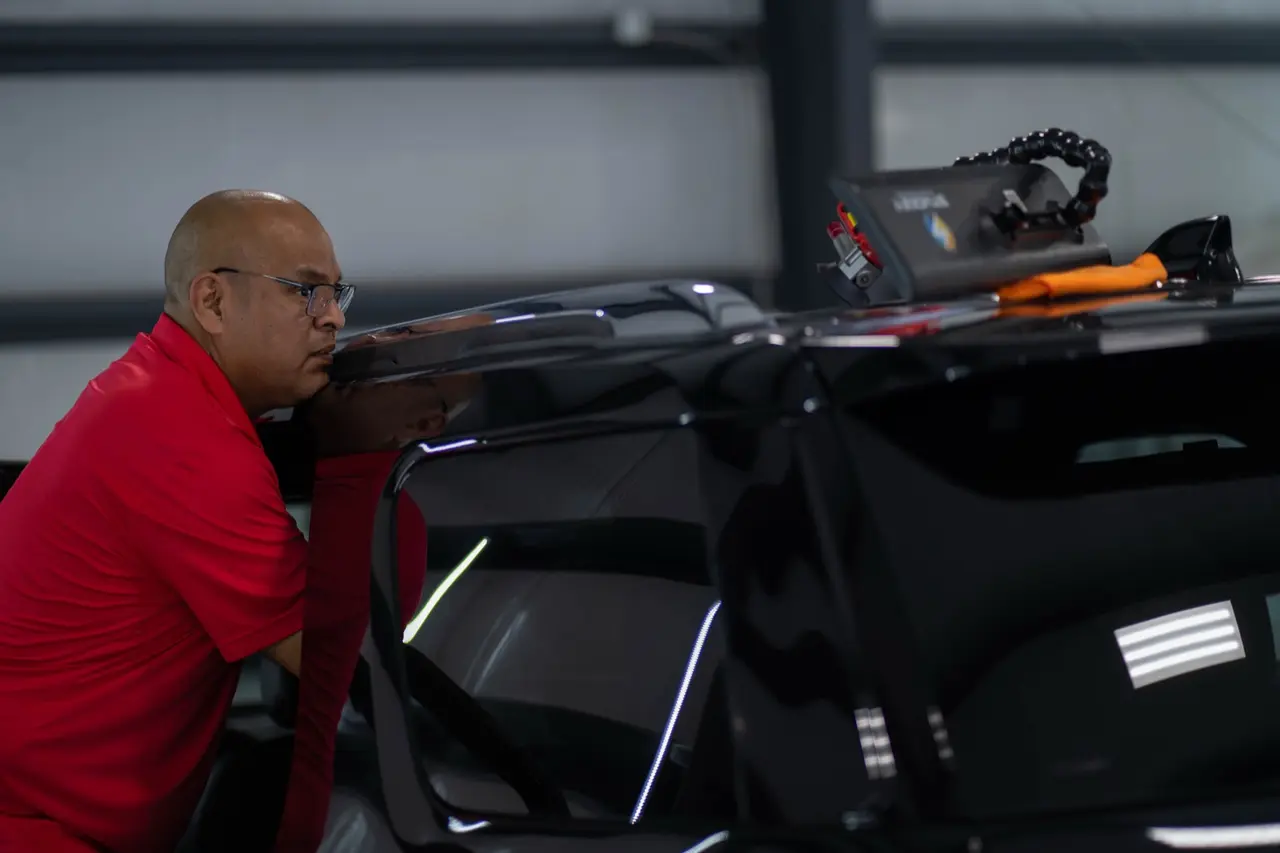
Why on-lot matters
Moving inventory to an off-site shop means transport costs, units off your lot and out of your control, and a queue you do not manage. On-lot catastrophe work means:
- Units stay in your possession and on your floor plan
- You control the triage order — retail-ready units first
- Your sales team can still show and sell what is not currently being worked
- No transport exposure
What to ask any catastrophe crew
1. How many technicians, and for how long? A crew of four for three weeks is a different proposition from twelve for one. 2. What is the documentation per unit? You need per-VIN records for your insurer and your books. 3. What is the warranty, and who honours it after you leave? 4. What happens to units that need paint? These need a defined path, not an afterthought. 5. What is the daily throughput target, and what happens if it is missed?
Keep the factory finish
For retail inventory this is not a preference, it is the whole point. Paintless dent repair keeps original paint, which means no disclosure question at point of sale and no paint-meter surprise for a buyer or an auction.
We work dealership and fleet lots across Texas and deploy to major hail events. Request an on-lot crew and we will scope the lot and give you a realistic throughput plan.