
Short answer: yes, hail can total a car. It happens less often than people fear, and the reason a car gets totalled is usually not the one owners expect.
How the decision is actually made
An insurer compares the cost to repair against the actual cash value of the vehicle. When repair cost crosses a threshold percentage of that value, the vehicle is declared a total loss. The threshold varies by state and carrier, commonly somewhere between 70 and 100 percent.
Two variables drive it:
- How much damage there is — dent count, depth, and which panels
- What the car is worth — a fifteen-year-old commuter reaches the threshold
on damage that would barely register against a new truck
That is why identical hail on two cars parked side by side can total one and not the other.
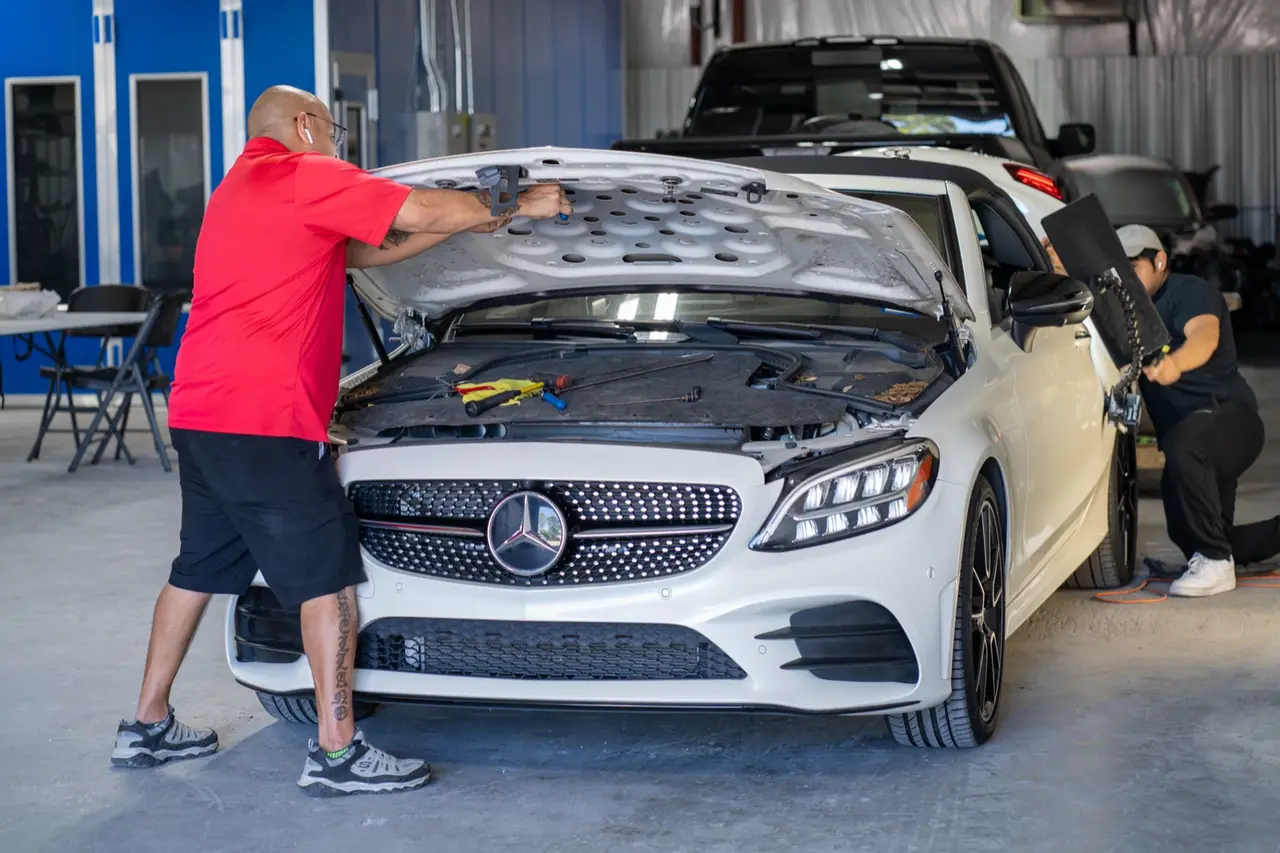
What pushes a hail car over the line
- Glass. Windshield, sunroof and backglass replacement adds up fast.
- Panels that need replacing rather than working. Stretched metal or damage
on an edge can force replacement and paint.
- Repaint. Once paint is involved, blend panels come with it, and the number
climbs steeply.
- Aluminium panels. More labour-intensive to work than steel.
Where the repair method changes the answer
This is the part most owners never hear. A hail car estimated for panel replacement and repaint can cost two to three times the same car estimated for paintless dent repair. On a vehicle near the total-loss threshold, the method can decide the outcome.
Paintless dent repair works the metal back from behind the panel, so the factory paint is never broken. It is not always possible — stretched metal and broken paint rule it out — but it is possible far more often than a general collision estimate assumes.
If your car is called a total loss
You have options:
1. Ask for the estimate. You are entitled to see how the number was reached. 2. Get a second scope. Specifically ask whether PDR was considered. 3. Consider a retained-salvage buyback. You keep the car, the insurer pays the value less salvage, and you decide what to repair. This affects the title, so understand that before agreeing. 4. Challenge the vehicle value if comparable listings in your area are higher than the figure used.
We write hail estimates in person, under lighting, and we will tell you plainly if a vehicle is not worth repairing. Schedule an in-person estimate.