
What you do in the first two days has more effect on the outcome than anything that happens later. Work through this in order.
Hour zero to two: document
1. Do not move the car yet if it is safe where it is. 2. Wide photographs of the vehicle in place, with the surroundings visible. 3. Each panel straight on, then again at a low angle so the light rakes across the dents. Hail is close to invisible photographed flat. 4. Every piece of broken glass, before you clear it. 5. The interior, if any glass broke — carpet, seats, headliner. 6. Note the date and time of the storm. You will be asked.
Hour two to twenty-four: protect and file
- Cover broken glass with plastic sheet and tape if rain is coming. Keep the
receipt; reasonable mitigation costs are usually claimable.
- Open your comprehensive claim. Do not wait to see what the repair costs.
Filing windows are real and missing one can end the claim.
- Ask your carrier three questions: what is my comprehensive deductible, do
I have rental coverage, and can I choose my own repairer.
Hour twenty-four to forty-eight: get it scoped
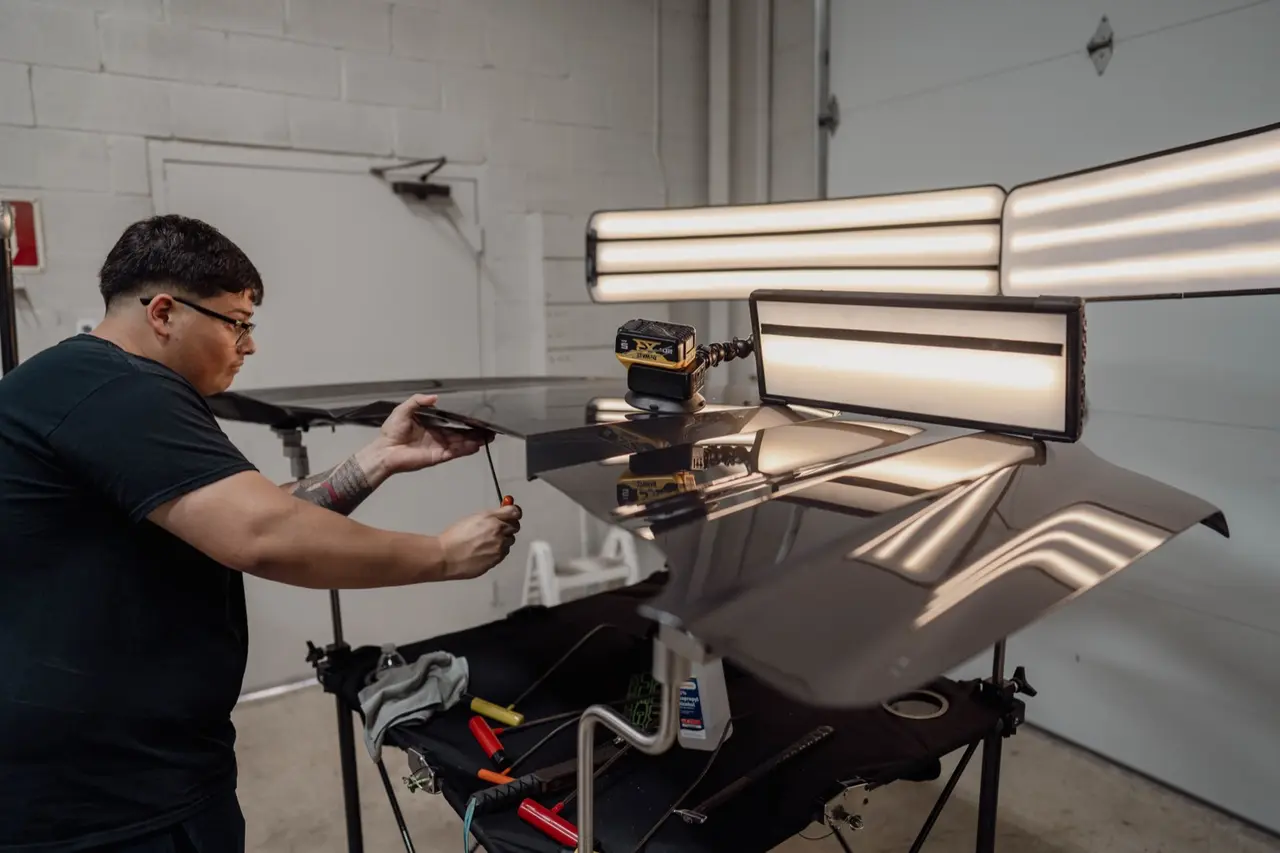
Get the damage read under proper reflective lighting, panel by panel. Not in a driveway, not from your photographs. A daylight walkaround routinely misses a third of the dent count, and that shortfall becomes a supplement that stalls your repair halfway through.
What not to do
- Do not sign anything you have not read, especially a direction to pay.
- Do not agree to a repair scope you have not seen. Ask for the dent count
per panel.
- Do not let anyone start work before the claim is open, unless you intend
to pay for it yourself.
- Do not wait for better weather. Dents that broke the paint film will begin
to corrode.
Questions to ask any repairer
- Who carries the warranty, and for how long?
- Was this estimate written under lighting or from photographs?
- What happens if a supplement is needed mid-repair?
- Where is the vehicle actually being worked on?
We answer all four before anyone signs anything. Schedule an in-person estimate.