
Hail on a leased vehicle is a problem with a deadline attached. Handle it now and it is a claim. Handle it at turn-in and it is a bill.
Your lease almost certainly makes this your problem
Standard lease agreements hold you responsible for damage beyond normal wear and tear. Hail dents are not normal wear. At turn-in, the inspector will document them and the leasing company will charge you — typically at their rates, not yours.
Those excess-wear charges are frequently higher than what the repair would have cost with your own insurer and your own choice of repairer.
What to do, in order
1. Check your insurance. Leases almost always require comprehensive coverage, so you very likely have it. 2. Open the claim now, not near turn-in. Filing windows apply regardless of who owns the car. 3. Tell the leasing company if your agreement requires notification of damage. Many do. 4. Use a method that keeps factory paint. This matters more on a lease than anywhere else, because the vehicle is going straight back to an inspector with a paint meter. 5. Keep all documentation. The claim, the estimate, the invoice. Produce it at turn-in if the damage is queried.
Why PDR specifically
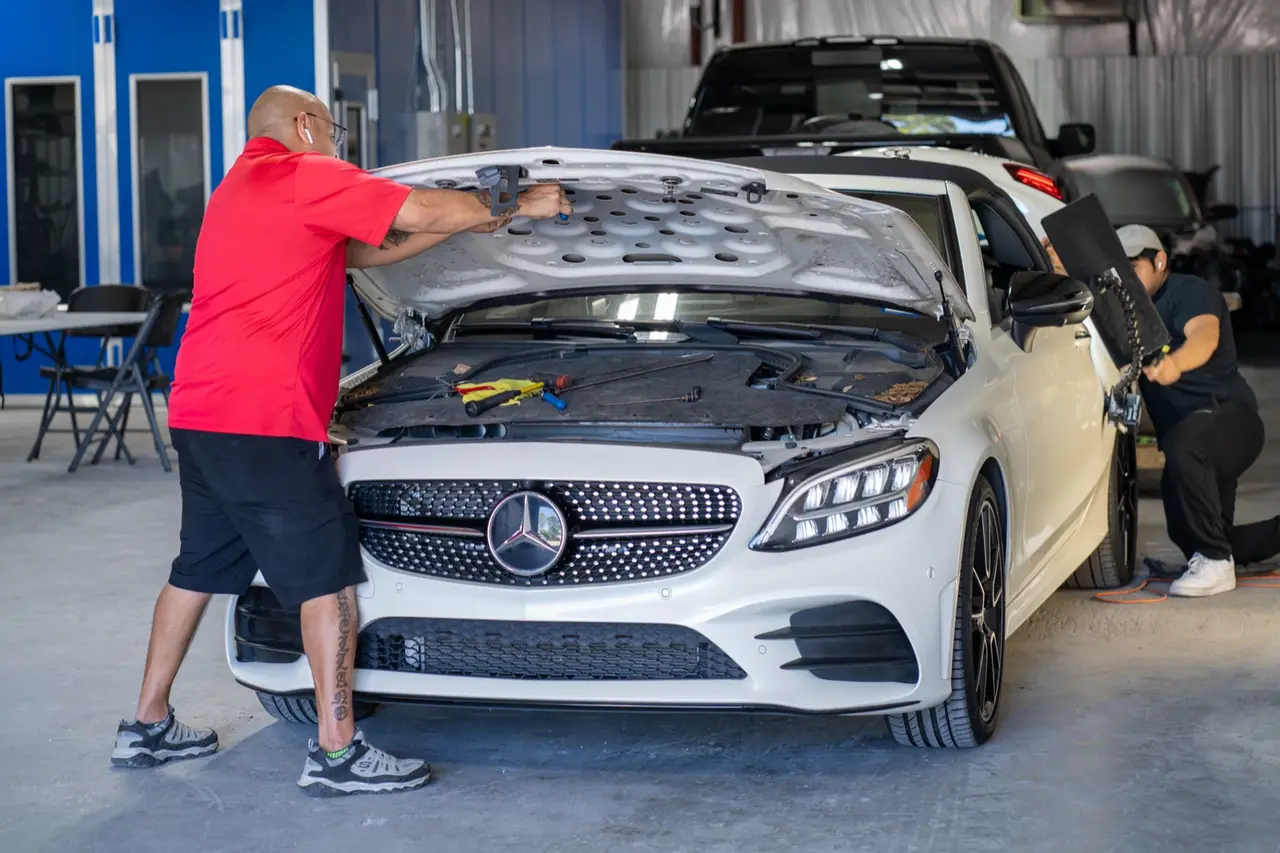
A leased car is going to be inspected by someone whose job is finding chargeable damage. Paintless dent repair leaves the factory finish intact, so a paint meter reads normal and there is no refinish line to flag.
A repainted roof on a lease turn-in can trigger a prior-damage assessment even when the repair itself was sound.
Do not let it ride
The most expensive version of this is waiting until turn-in month, discovering the charge, and then trying to repair under time pressure during catastrophe season when every queue is full.
Schedule an in-person estimate and we will tell you what the vehicle actually needs.