
A hail car loses value in two directions: leaving it unrepaired, and repairing it the wrong way.
What an appraiser looks at
At trade-in or auction, a hail car gets checked for three things:
- Visible damage, read at an angle under whatever light is available
- Paint depth, measured with a paint meter — a cheap tool that instantly
shows whether a panel has been refinished
- Panel gaps and fastener marks, which indicate a panel has been off
A paint meter reading well above factory on a roof or hood says "prior damage" whether or not the work was good. Once that is on the sheet, the offer moves.
The case for keeping factory paint
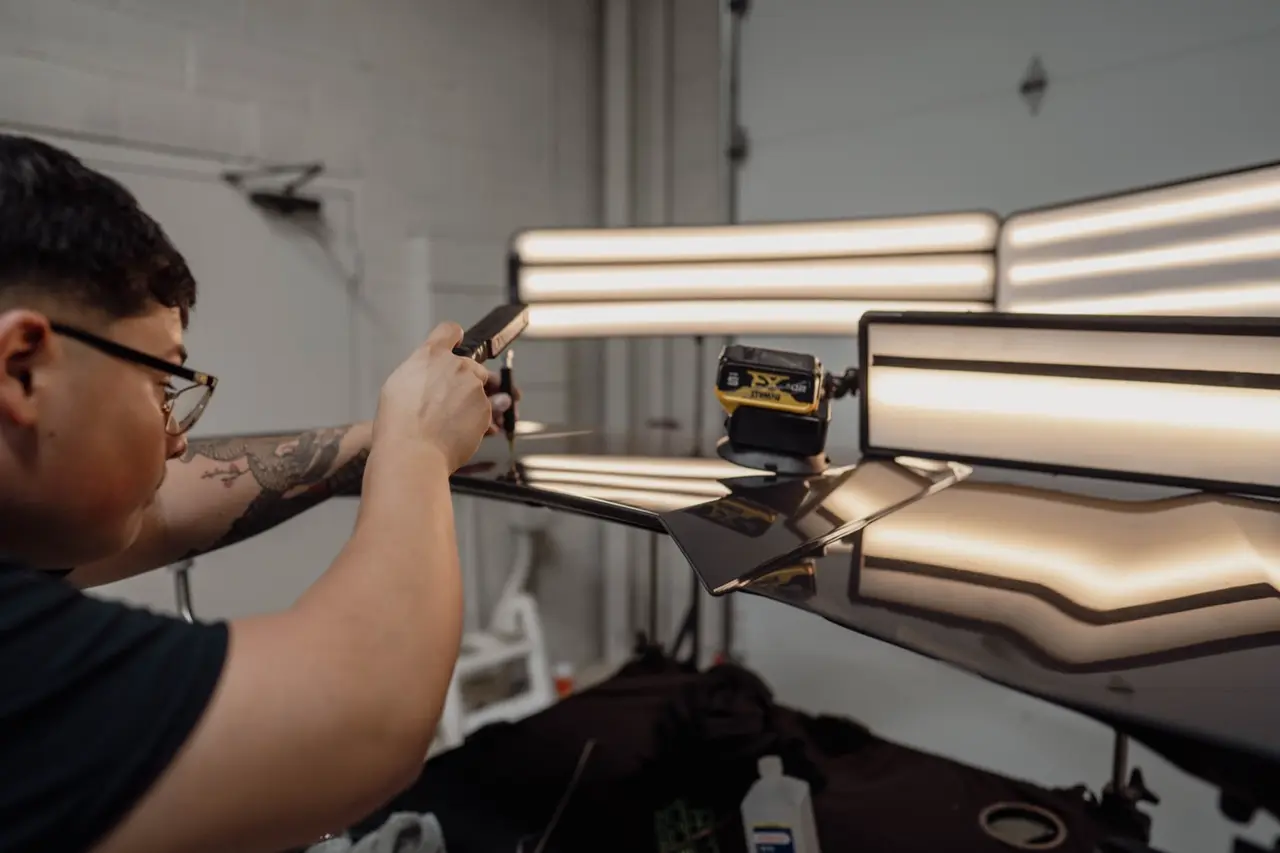
Paintless dent repair works the metal from behind and never breaks the finish. A paint meter reads factory. There is no refinish line, no blend into the adjacent panel, and no overspray in the door jambs for a sharp appraiser to find.
That is the practical resale argument, and it is why we push PDR wherever the damage allows it.
What unrepaired hail costs you
Dealers price hail cars conservatively, because they have to either wholesale them or pay to repair them before retail. Expect a deduction well beyond what the repair would have cost you with a claim.
Unrepaired hail also compounds:
- Dents that broke the paint film start to corrode, especially where roads are
salted
- A roof dent that cracked the seal can let water into the headliner
- Damage nobody documented becomes harder to claim as time passes
If you are buying a used car
Check for hail history the same way an appraiser would: look along the panels at a low angle, in good light, and ask whether the car has ever had a hail claim. A properly PDR-repaired hail car is a perfectly good buy. A poorly repainted one is a different proposition.
Schedule an in-person estimate if you want a vehicle assessed before you trade or sell it.